
Factors Affecting the Ethical Leadership of Educational Institution Administrators Ban Klang School Mueang Songkhla District, Songkhla Province
Keywords:
ethical leadership, Regarding factors affecting, Regarding the community acceptanceAbstract
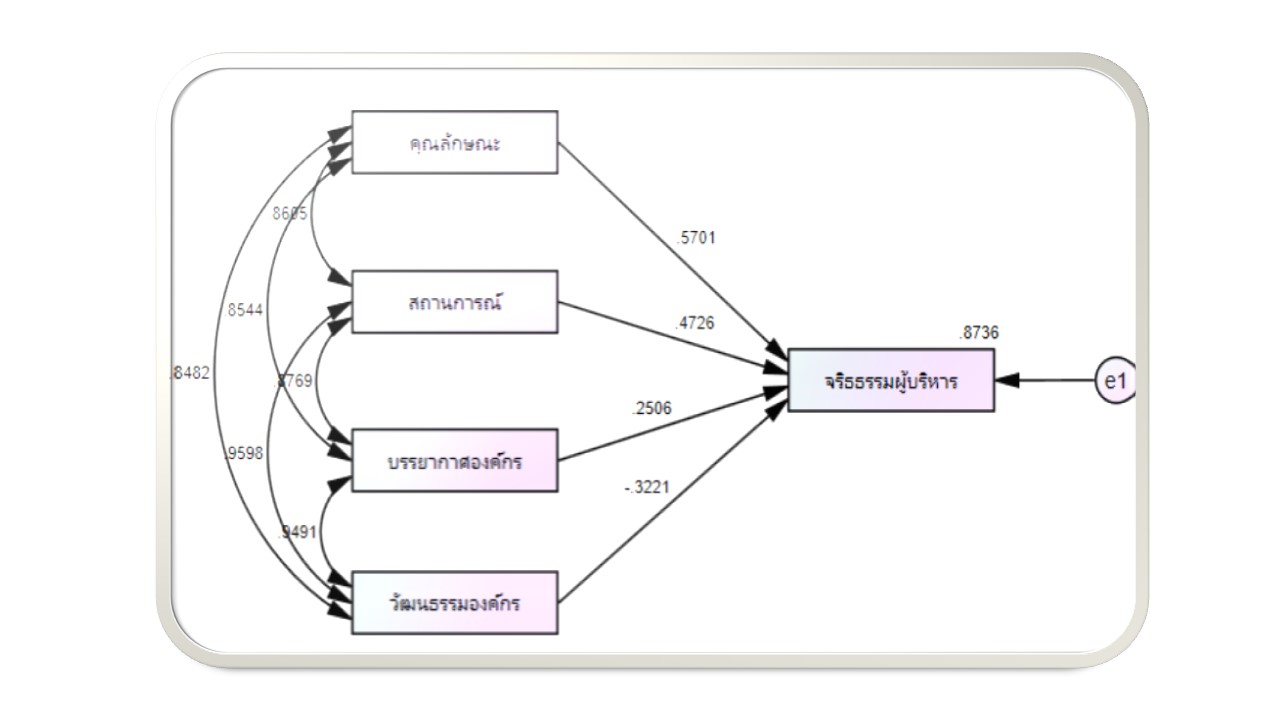
This research is Descriptive research with the objective 1) study ethical leadership levels, 2) level of factors affecting the ethical leadership, and 3) factors affecting ethical leadership of Bangklang school administrators, Muang District, Songkhla Province. The samples consisted of administrators, teachers, support staff, school committee members and people living around the school. Key informants were teachers and staff of Banklang school. Determine the sample size using Krejcie and Morgan tables, get a sample of 70 people, and sample random sampling by raffle do not put it back. The research instrument is a questionnaire created by the researcher to determine the content accuracy of the questionnaire with an IOC value between 0.67 to 1.00, Episode 2 equals .97 and Part 3 equals .94. Quantitative data, ethical leadership levels, and the level of factors affecting ethical leadership of school administrators. The statistics used include mean and standard deviation, and analysis of factors affecting ethical leadership by multiple regression. It was found that
1) The ethical leadership level of school administrators as a whole and in specific areas is at the highest level; 2) The factor level most affecting the ethics of the administrators was characteristic factor (.5701), followed by situational factor (.4726), organizational culture factor (.3221) and atmosphere factor (.2506) 3) factors affecting the ethics of the school administrators, the ethical leadership score of the administrators of Banklang school was .9155. The coefficient of prediction or R2 was 83.09 percent; Factors affecting executive ethical leadership the weightiest values were characteristics (.5701), followed by situational (.4726), organizational culture (.3221), and atmosphere (.2506), respectively. Statistically significant at the level of .01 with a predictive coefficient of .96, predictable was 96 %
References
ชนธัญ ติ๊บเมืองมา. (2560). ภาวะผู้นำการเปลี่ยนแปลงของผู้บริหารสถานศึกษาในการดำเนินงานประกันคุณภาพภายในสถานศึกษา สังกัดสำนักงานเขตพื้นที่การศึกษาประถมศึกษาพะเยา เขต 1. (การศึกษาค้นคว้าด้วยตนเองปริญญาศึกษาศาสตรมหาบัณฑิต สาขาวิชาบริหาร การศึกษา) มหาวิทยาลัยพะเยา.
ธนิกา กรีธาพล. (2560). รูปแบบการพัฒนาภาวะผู้นำเชิงจริยธรรมของผู้บริหารสถานศึกษา สังกัดสำนักงาน เขตพื้นที่การศึกษาประถมศึกษานครราชสีมา เขต 1-7. ครุศาสตรดุษฎีบัณฑิต สาขาวิชาภาวะผู้นำทางการบริหารการศึกษา มหาวิทยาลัยราชภัฏนครราชสีมา.
ธนิต รัตนศักดิ์ดา.(2565). ภาวะผู้นำทางวิชาการของผู้บริหารสถานศึกษา สังกัดสำนักงานเขตพื้นที่การศึกษาประถมศึกษาปราจีนบุรี เขต 2. ศึกษาศาสตรมหาบัณฑิต สาขาวิชาการบริหารการศึกษา มหาวิทยาลัยเกริก.
นิติพล ภูตะโชติ. (2559). พฤติกรรมองค์กร. (พิมพ์ครั้งที่3). กรุงเทพฯ: สำนักพิมพ์แห่งจุฬาลงกรณ์ มหาวิทยาลัย.
นพพล ศุภวิทยาเจริญกุลม. (2560). ภาวะผู้นำของผู้บริหารสถานศึกษา สังกัดสำนักงานเขตพื้นที่การศึกษาประถมศึกษาสกลนคร เขต 1. (วิทยานิพนธ์ปริญญาครุศาสตรมหาบัณฑิต สาขาวิชาการบริหารการศึกษา). มหาวิทยาลัยราชภัฏสกลนคร.
บุญชม ศรีสะอาด. (2554). หลักการวิจัยเบื้องต้น. (พิมพ์ครั้งที่ 9). กรุงเทพฯ: สุวิริยาสาส์น.
ปฏิมา ถนิมกาญจน และเพ็ญพร ปุกหุต.(2565). องค์การส่งผลต่อประสิทธิภาพการทำงานผ่านคุณภาพชีวิตในการทำงานของพนักงานบริษัทในเขตนิคมอุตสาหกรรมสุรนารี.วารสารวิชาการเทคโนโลยีการจัดการ. 3(1),83
ผุย รตฺนโชโต. (2558). ภาวะผู้นำเชิงจริยธรรมของผู้บริหารสถานศึกษาตามหลักพรหมวิหาร 4 ที่ส่งผลต่อการปฏิบัติงานของครู โรงเรียนสังกัดเทศบาลนครสกลนคร.บัณฑิตวิทยาลัย:มหาวิทยาลัยนครพนม.
เพ็ญศิริ สมเรือน (2560). ภาวะผู้นำเชิงจริยธรรมของผู้บริหารสถานศึกษา สังกัดสำนักงานเขตพื้นที่การศึกษาประถมศึกษาตราด. บัณฑิตวิทยาลัย มหาวิทยาลัยบูรพา.
ภานุวัฒน์ บุญธัญกิจ. (2564). ภาวะผู้นำเชิงจริยธรรมที่พึงประสงค์ของผู้บริหารสถานศึกษา สังกัดกรุงเทพมหานคร. วิทยานิพนธ์หลักสูตรการศึกษามหาบัณฑิต สาขาวิชาการจัดการศึกษา คณะศึกษาศาสตร์ มหาวิทยาลัยบูรพา.
รุ่งชัชดาพร เวหะชาติ (2560). คุณธรรม จริยธรรมสำหรับผู้บริหารมืออาชีพ.สงขลา: นำศิลป์โฆษณา.
สุธาสินี แม้นญาติ. (2554). โมเดลความสัมพันธ์โครงสร้างปัจจัยที่ส่งผลต่อภาวะผู้นาเชิงจริยธรรมของผู้บริหาร สถานศึกษา สังกัดกรมส่งเสริมการปกครองท้องถิ่น. วิทยานิพนธ์ปริญญาปรัชญาดุษฎีบัณฑิต สาขาวิชาการบริหารการศึกษา บัณฑิตวิทยาลัย มหาวิทยาลัยขอนแก่น.
อโนชา สิงห์สนั่น. (2558). คุณลักษณะทางชีวสังคมและสภาพแวดล้อมของโรงเรียนที่ส่งผลต่อภาวะผู้นำเชิงจริยธรรมตามหลักพระพุทธศาสนาของผู้บริหารสถานศึกษา สังกัดกรุงเทพมหานคร. ปริญญานิพนธ์การศึกษามหาบัณฑิต สาขาวิชาการบริหารการศึกษา บัณฑิตวิทยาลัย มหาวิทยาลัยศรีนครินทรวิโรฒ.
Alexander, S. and Ruderman, M. (1987) The Role of Procedural and Distributive Justice in Organizational Behavior. Social Justice Research.
Brown, M. E., Treviño, L. K., & Harrison, D. A. (2005). Ethical leadership: A social learning perspective for construct development and testing. Organizational Behavior and Human Decision Processes, 97(10)
DuBrin, A. J. (2010). The principles of leadership (6th ed.). Canada: South-Western Cengage-Learning.
Glanz, J. (2006). What every principal should know about ethical and spiritual leadership. Thousand Oaks, California: Corwin.
House, R. J., & Mitchell, T. R. (1974). Path-goal theory of leadership. Journal of Contemporary.
Kocabas,I. & Karakose,T.(2009) Ethics in school administration. African Journal of Bassiness Management, 3(4), 126-130.
Trevio, L.K., Hartman, L.P., & Brown, M.2000. Moral person and moral manager: How executives develop are potation for ethical leadership. California Management Review.
Downloads
Published
How to Cite
Issue
Section
License
Copyright (c) 2023 Journal of Perspectives in Education

This work is licensed under a Creative Commons Attribution-NonCommercial-NoDerivatives 4.0 International License.


