
Causal Model of Factors Influencing Educational Inequalities: Evidence from Songkhla Education Sandbox
Keywords:
Causal Model of Factors, Educational Inequalities, Education SandboxAbstract
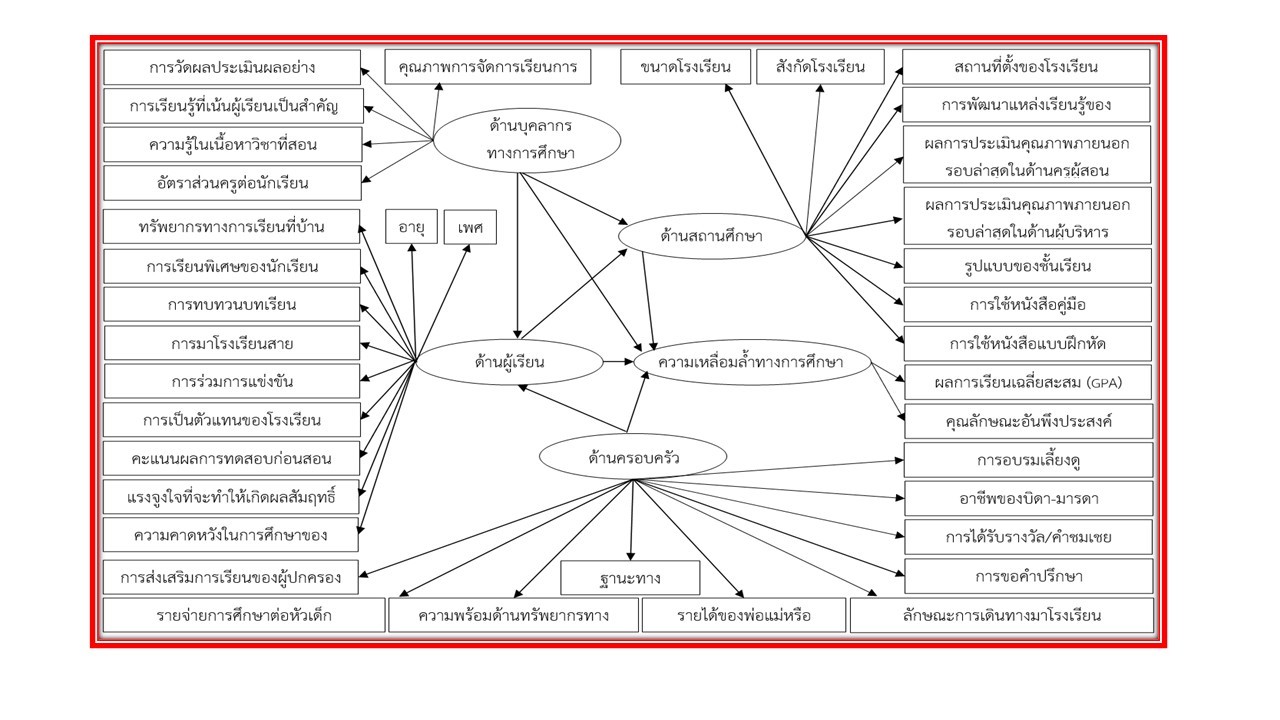
The study’s objectives were to develop and empirically test a model of factors influencing educational inequality and to identify strategies for reducing educational inequality within the Songkhla Education Sandbox. This study was carried out in two phases. In Phase 1, stratified random sampling was employed to collect data through structured questionnaires administered to 343 experienced teachers from schools within the Songkhla Education Sandbox to test the proposed conceptual model. The data were analyzed using Confirmatory Factor Analysis (CFA) and Structural Equation Model (SEM). Phase 2 involved focus group interviews with sixteen experts and specialists possessing relevant knowledge and experience in education to identify strategies for reducing educational inequality within the Songkhla Education Sandbox. A content analysis was used to analyze interviewed data. Results revealed that, in Phase 1, the proposed model was consistent with the empirical data, demonstrating acceptable reliability, validity, and statistically significant factor loadings at the .01 level, collectively explaining 92.6% of the variance. In Phase 2, eight strategies for reducing educational inequality were identified: (1) prioritizing learner-related factors, followed by improvements in educational personnel and institutional factors; (2) fostering consistent family support and active student engagement with schools; (3) enhancing teachers’ commitment to effective instruction to reduce reliance on private tutoring, promote lesson review, address tardiness, and strengthen school-family collaboration; (4) expanding employment and career opportunities with fair wages to sustain family support for education and reduce economic barriers; (5) improving instructional quality through diverse assessments and balanced teacher-student ratios; (6) strengtheningschool management and supervision; (7) implementing a competency-based curriculum; and (8) promoting collaboration among network schools to achieve shared educational goals.
References
Jirada Prasartpornsirichoke, & Yoshi Takahashi. (2013). Assessing Inequakities in Thai Education. Journal of east Asian studies, 18, 1–26.
Lambert, D., & Lines, D. (2000). Understanding assessment, purpose, perceptions, practice. TJ International Lth. Padstow Cornwall.
TDRI. (2017). ปฏิรูปการศึกษาไทยแล้วไปไหน? กับ ‘สมเกียรติ ตั้งกิจวานิชย์. https://tdri.or.th/2017/01/2017-01-12/
ทินลัคน์ บัวทอง. (2561). การประเมินผลกระทบของความเหลื่อมล้ำด้านทรัพยากรทางการศึกษาต่อผลสัมฤทธิ์ทางการเรียนของนักเรียนประถมศึกษาตอนต้นในจังหวัดตาก. วิทยานิพนธ์ศึกษาศาสตรมหาบัณฑิต สาขาวิชาศึกษาศาสตร์ มหาวิทยาลัยสุโขทัยธรรมมาธิราช.
นณริฏ พิศลยบุตร. (2559). ความเหลื่อมล้ำทางการศึกษาของไทย: ข้อสรุปจากผลการสอบปิซ่า (PISA). https://www.pier.or.th/abridged/2016/08/
นพรัตน์ ใบยา. (2555). การประเมินความเหลื่อมล้ำทางการศึกษาวิชาคณิตศาสตร์และวิทยาศาสตร์ระดับมัธยม ศึกษาตอนปลาย. วิทยานิพนธ์ศึกษาศาสตรมหาบัณฑิต สาขาวิชาศึกษาศาสตร์ มหาวิทยาลัยสุโขทัยธรรมมาธิราช.
นิธิศ วงศ์ตุลาการ. (2565). การศึกษาปัจจัยความเหลื่อมล้ำทางการศึกษาที่มีผลต่อผลสัมฤทธิ์ทางการศึกษาของนักเรียนในโรงเรียนสังกัดสำนักงานเขตพี้นที่การศึกษามัธยมศึกษา จังหวัดนครศรีธรรมราช. วิทยานิพนธ์ศึกษาศาสตรมหาบัณฑิต สาขาวิชาการบริหารการศึษา มหาวิทยาลัยมหามกุฏราชวิทยาลัย.
รัชวดี แสงมหะหมัด. (2560). การสำรวจค่านิยมของประชาชนต่อการเมืองการปกครองและวัฒนธรรมทางสังคมไทย. สถาบันพระปกเกล้าฯ.
วินิจ ผาเจริญ และคณะ. (2564). ความเหลื่อมล้ำทางการศึกษาของพลเมืองไทยวัยเรียนกับสถานการณ์การเรียนออนไลน์ในยุคไวรัสโควิด-19. วารสารปัญญาปณิธาน, 14(3).
สถาบันวิจัยเพื่อการพัฒนาประเทศไทย (ทีดีอาร์ไอ). (2555). ยกเครื่องการศึกษาไทย : สู่การศึกษาที่มีคุณภาพอย่างทั่วถึง. (เอกสารประกอบการสัมมนาวิชาการ มปท, Issue.
สำนักงานเลขาธิการสภาการศึกษา. (2555). คู่มือสร้างความรู้ความเข้าใจแก่ผู้บริหาร ครูและนักเรียน เพื่อเตรียมความพร้อมรองรับการประเมินตามโครงการวิจัยนานาชาติ (PISA และ TIMSS). สกศ.
สำนักงานศาลรัฐธรรมนูญ. (2566). รัฐธรรมนูญแห่งราชอาณาจักรไทย พุทธศักราช 2560 (แก้ไขเพิ่มเติม พุทธศักราช 2564). บริษัท แอคทีฟ พริ้นท์ จำกัด.
สุชาดา ปัทมวิภาต. (2565). PISA in FOCUS: การจัดสรรทรัพยากรการเรียนอย่างเท่าเทียม สัมพันธ์กับผลการเรียนรู้ของนักเรียนอย่างไร. https://pisathailand.ipst.ac.th/article-7/
อัมมาร สยามวาลา, ดิลกะ ลัทธพิพัฒน์ และสมเกียรติ ตั้งกิจวานิชย์. (2555). การปฏิรูปการศึกษารอบใหม่ : สู่การศึกษาที่มีคุณภาพอย่างทั่วถึง.” เอกสารประกอบการสัมมนาวิชาการประจำปี 2554. สถาบันวิจัยเพื่อการพัฒนาประเทศไทย.
อินทุอร ศรีพรรณ. (2561). การวิเคราะห์ความเหลื่อมล้ำทางการศึกษาของประเทศไทย. วิทยานิพนธ์เศรษฐศาสตร์มหาบัณฑฺต สาขาเศรษฐศาสตร์ มหาวิทยาลัยเกษตรศาสตร์.
อีซา หอมหวน. (2556). การวิเคราะห์ผลกระทบของการเรียนพิเศษต่อมูลค่าเพิ่มและความเหลื่อมล้ำทางการศึกษาวิชาวิทยาศาสตร์ระดับมัธยมศึกษาตอนปลาย. วิทยานิพนธ์ศึกษาศาสตรมหาบัณฑิต สาขาการประเมินการศึกษา มหาวิทยาลัยสุโขทัยธรรมาธิราช.
Downloads
Published
How to Cite
Issue
Section
License
Copyright (c) 2026 Journal of Perspectives in Education

This work is licensed under a Creative Commons Attribution-NonCommercial-NoDerivatives 4.0 International License.


