INTEGRATED BUDDHIST HOLISTIC HEALTH CARE FOR NURSES AFTER RETIREMENT KRATHUM BAEN HOSPITAL, KRATHUM BAEN DISTRICT, SAMUT SAKHON PROVINCE
Keywords:
Holistic Well-being, Integrated Buddhist Approach, Nurses after Retirement from Government ServiceAbstract
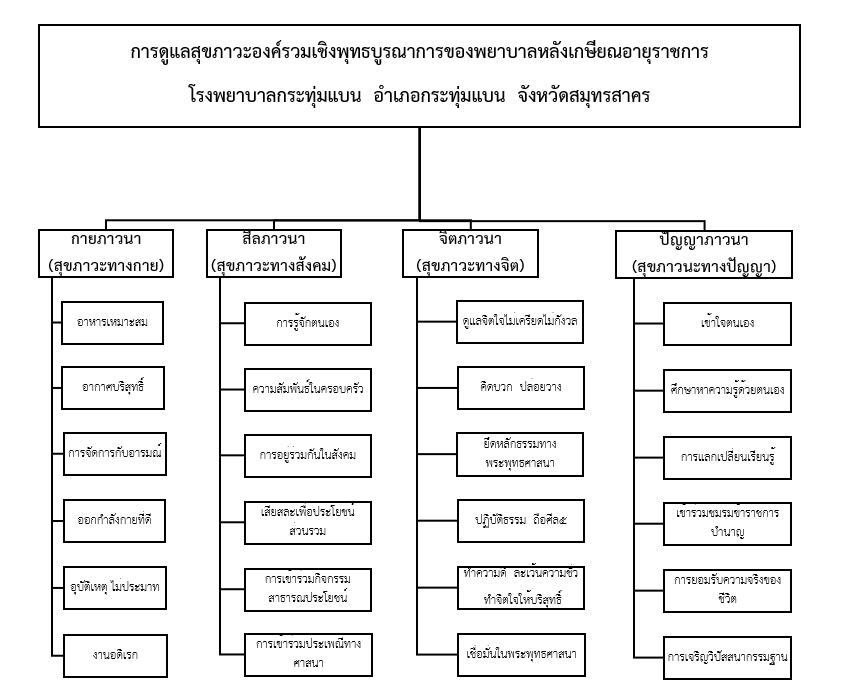
This research aimed to: 1.Study holistic well-being care through an integrated Buddhist approach among retired nurses; 2.Develop a knowledge set on holistic well-being care through an integrated Buddhist approach for retired nurses; and 3.present a model of holistic well-being care through an integrated Buddhist approach for retired nurses. This study employed participatory action research. The findings revealed that: 1.Holistic well-being care through an integrated Buddhist approach for retired nurses of Krathum Baen Hospital, Krathum Baen District, Samut Sakhon Province, comprises four dimensions: physical development (kāya-bhāvanā) focusing on physical well-being; moral development (sīla-bhāvanā) focusing on social well-being; mental development (citta-bhāvanā) focusing on psychological well-being; and wisdom development (paññā-bhāvanā) focusing on intellectual well-being. 2.The developed knowledge set of holistic well-being care through an integrated Buddhist approach in all four dimensions includes: (1) Kāya-bhāvanā (physical development): practicing moderation in consumption (bhojane mattaññutā), living in a clean and fresh environment, emotional regulation, Buddhist-based exercise, mindfulness to prevent accidents, and engaging in beneficial hobbies; (2) Sīla-bhāvanā (moral development): observing the Five Precepts and maintaining positive relationships within the family and society; (3) Citta-bhāvanā (mental development): emphasizing stress reduction, letting go, positive thinking, and practicing Dhamma; and (4) Paññā-bhāvanā (wisdom development): cultivating self-awareness, developing wisdom, accepting the truth of life in accordance with the Three Characteristics (Tilakkhaṇa), and practicing Vipassanā meditation. 1.The proposed model of holistic well-being care through an integrated Buddhist approach for retired nurses integrates the Four Foundations of Mental Development (Bhāvanā 4), the Five Precepts, the Three Characteristics of existence, mindfulness of death (maraṇānussati), and Vipassanā meditation, leading to an improved quality of life among retired nurses.
References
ไกรวรรณ์ ชินทตฺติโย และคณะ. (2560). การบูรณาการหลักพุทธธรรมในการเสริมสร้างสุขภาวะผู้สูงอายุขององค์กรชุมชน อำเภอสามพราน จังหวัดนครปฐม (รายงานวิจัย). พระนครศรอยุธยา: มหาวิทยาลัยมหาจุฬาลงกรณ์ราชวิทยาลัย.
จิรวรรณ โปรดบำรุง. (2559). การดูแลผู้สูงอายุตามหลักพุทธจริยศาสตร์. พุทธชินราชเวชศาสตร์, 33(2), 233-240.
ชุติพร เจริญพัฒนา. (2559). พุทธวิธีในการบรรเทาความเครียดของผู้สูงอายุในสังคมไทย: กรณีศึกษาสถาน สงเคราะห์คนชราเฉลิมราชกุมารี (หลวงพ่อเปิ่นอุปถัมภ์) จังหวัดนครปฐม.วิทยานิพนธ์พุทธศาสตรมหาบัณฑิต. บัณฑิตวิทยาลัย: มหาวิทยาลัยมหาจุฬาลงกรณราชวิทยาลัย.
ธัชธร ขจรกลิ่น. (2563.) คุณภาพชีวิตหลังเกษียณอายุราชการของข้าราชการ ศูนย์รักษาความปลอดภัยกองบัญชาการกองทัพไทย. วิทยานิพนธ์รัฐประศาสนศาสตรมหาบัณฑิต. วิทยาลัยบัณฑิตศึกษาด้านการจัดการ: มหาวิทยาลัยศรีปทุม.
นิวัฒน์ พุฒวันเพ็ญ. (2563). การพัฒนาคุณภาพชีวิตของผู้เกษียณอายุตามหลักพุทธธรรม. วิทยานิพนธ์พุทธศาสตรมหาบัณฑิต สาขาวิชาพระพุทธศาสนา. บัณฑิตวิทยาลัย: มหาวิทยาลัยมหาจุฬาลงกรณ์ราชวิทยาลัย.
พระกองสีญารธโร (พรมโพธิ์).(๒๕๖๐). ศึกษาวิเคราะห์การดำเนินชีวิตตามหลักภาวนา๔ ในพระพุทธศาสนา. วิทยานิพนธ์พุทธศาสตรมหาบัณฑิต. บัณฑิตวิทยาลัย: มหาวิทยาลัยมหาจุฬาลงกรณ์ราชวิทยาลัย.
พัชรทิรา ทองโชต. (2563). การศึกษาคุณภาพชีวิตของคนวัยเกษียณอายุกรณีศึกษา หมู่บ้านแห่งหนึ่ง .(รายงานวิจัย). คณะบริหารธุรกิจ: มหาวิทยาลัยรามคำแหง.
สุพาภรณ์ กันยะติ๊บ.(2560). หลักพุทธธรรมกับการสร้างเสริมสุขภาพของผู้สูงอายุ: กรณีศึกษา สถานปฏิบัติธรรมแห่งหนึ่ง (รายงานวิจัย). คณะสาธารณสุขศาสตร์: มหาวิทยาลัยธรรมศาสตร์.
Downloads
Published
Issue
Section
License
Copyright (c) 2025 Journal of MCU Dvravati Review

This work is licensed under a Creative Commons Attribution-NonCommercial-NoDerivatives 4.0 International License.




