Phra Chaiwat Chutinthro (Saeoueng)
ESTABLISHMENT OF A COMMUNITY LEARNING CENTER BUDDHAPANYA:VICHA PHAE, SAI NGAM,BANG LEN, NAKHONPATHOM
Keywords:
รูปแบบ, การใช้ประโยชน์, ใบไม้แห้ง, ชุมชนวัดไผ่สามตำลึงAbstract
ABSTRACT
This research is to 1) study the problems that arise in managing dry matter, 2) develop information in a dry manual, and 3) present the dry management model of the Sam Tamlueng indigenous temple community. Bang Len District, Nakhon Pathom Province, in a survey research Don't forget to collect data for in-depth reasons with an important researcher who can specifically observe 15 images/people and survey groups of 9 images/people to research the accompanying content and present it descriptively.
The results showed that
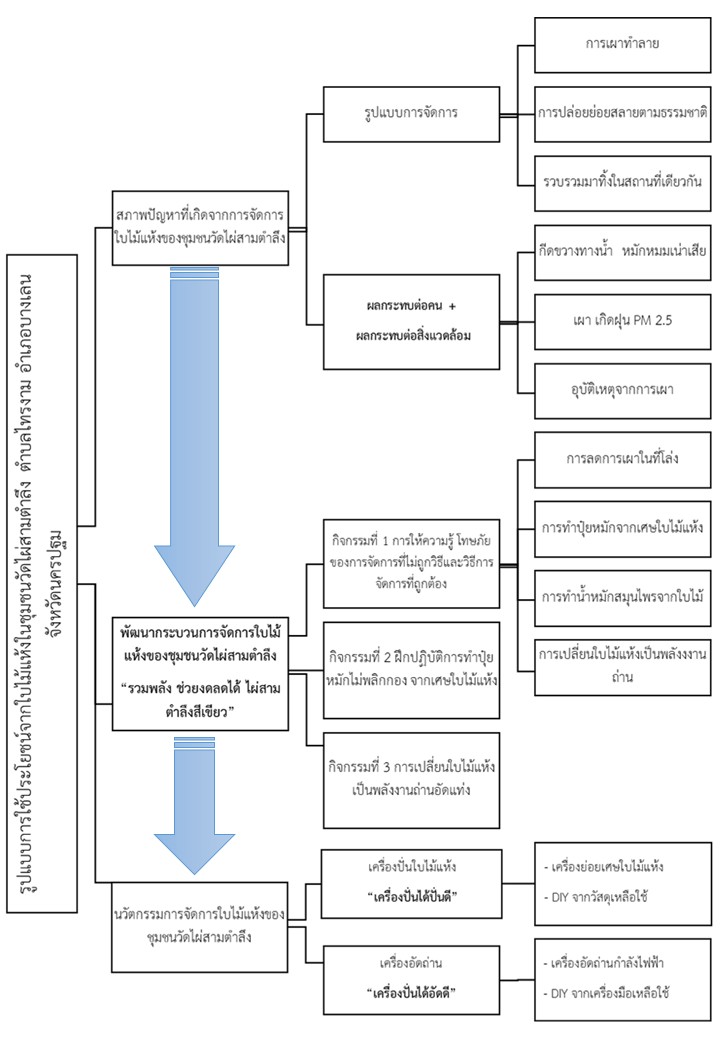
1) The problem of managing dry leaves in the Wat Phai Sam Tamlueng community. Lack of attention to the effects of living life Emphasis on productivity and fastest lead time. Causes smoke pollution from agriculture. It affects the health of the breath in elderly people, sick people, and young children, making it difficult to breathe. Resulting in long-term health problems.
2) Develop the dry leaf management process of the Wat Phai Sam Tamlueng community by using the 3Rs model as an activity: 1 providing knowledge Blame the dangers of improper management. Work together to develop 2. Making good fertilizer to save money. 3. Making dry leaves into "charcoal" fuel.
3) The dry leaf management model of the Wat Phai Sam Tamlueng community is called the “PDI model”, which is P = Participation. Participation of communities and various sectors in the use of leaves. D = Develop, developing activities to provide knowledge. Create added value as charcoal briquettes and create benefits by making it into leaf compost. I = Innovation, applying wisdom and combining it with new knowledge to create innovation. A “good blender” is a machine that breaks down dry leaves, and a “good blender” is a charcoal press. From what we have, apply it to improve the form and working system.
References
เอกสารอ้างอิง
แข มังกรวงษ์. (2562). “แนวทางการสร้างสรรค์เนื้อหาสื่อเพื่ออนุรักษ์สิ่งแวดล้อม: ยังคงสีคราม”. วารสาร Asian Creative Architecture, Art and Design: ACAAD. ปีที่ 28 ฉบับที่ 1 (มกราคม - มิถุนายน): 96.
พระมหาประกาศิต สิริเมโธ และคณะ. (2561). “ปราชญ์ป่า : กระบวนการสร้างจิตสำนึกร่วมในการจัดการป่า ชุมชนต้นแบบ เขตลุ่มแม่น้ำมูลตอนบน”.วารสารสันติศึกษาปริทรรศน์ มจร. มหาวิทยาลัยมหาจุฬาลง กรณราชวิทยาลัย, ปีที่ 6 ฉบับพิเศษ (11 พฤษภาคม): 62.
มธุรส สว่างบำรุง. (2560). “การสำรวจทัศนคติทางสังคมของชุมชนภาคเหนือที่มีต่อการเผาขยะมูลฝอมใน บริเวณที่พักอาศัย”. วารสารวิจัย. คณะวิทยาศาสตร์ มหาวิทยาลัยแม่โจ้, ปีที่ ๑๘ ฉบับที่ ๑ (กุมภาพันธ์): 50.
สุปราณี วุ่นศรี และคณะ. (2561). “การศึกษาวิธีการผลิตเชื้อเพลิงอัดแท่งจากขี้เลื่อยไม้ยางพารากับมูลสัตว์”. วารสารวิจัย. มาหาวิทยาลัยเทคโนโลยีราชมงคลศรีวิชัย, ปีที่ 12 ฉบับที่ 2 (กรกฏาคม-ธันวาคม): 18.
สุภาพร พงศ์ธรพฤกษ์. (2562). “การวิจัยเชิงปฏิบัติการแบบมีส่วนร่วมเพื่อ การหมักปุ๋ยชีวมวลเหลือทิ้งในสวน วนเกษตร”. วารสารการจัดการสิ่งแวดล้อม. มหาวิทยาลัยราชภัฎอุตรดิตถ์ : คณะวิทยาศาสตร์และ เทคโนโลยี, ปีที่ 14 ฉบับที่ 2 (ธันวาคม): 80.
สุรศักดิ์ นุ่นมีศรี และคณะ. (2560). “การบูรณาการการจัดการศึกษาเพื่อท้องถิ่นในการแก้ปัญหามลพิษทาง อากาศในชุมชน เทศบาลเมืองเมืองแกนพัฒนา จังหวัดเชียงใหม่”. วารสารบัณฑิตวิจัย. มหาวิทยาลัย ราชภัฏเชียงใหม่, ปีที่ 8 ฉบับที่ 2 (กรกฎาคม-ธันวาคม): 499.
เอนก ฝ่ายจำปา. (2563). “การพัฒนารูปแบบการจัดการขยะแบบมีส่วนร่วมขององค์การบริหารส่วนตำบล จอมศรีอำเภอเชียงคาน จังหวัดเลย”. วารสารวิชาการสาธารณสุขชุมชน. สำนักงานสาธารณสุขอำเภอ เอราวัณจังหวัดเลย, ปีที่ 6 ฉบับที่ 2 ( เมษายน–มิถุนายน): 126.
Downloads
Published
Issue
Section
License
Copyright (c) 2024 Journal of MCU Dvravati Review

This work is licensed under a Creative Commons Attribution-NonCommercial-NoDerivatives 4.0 International License.




