
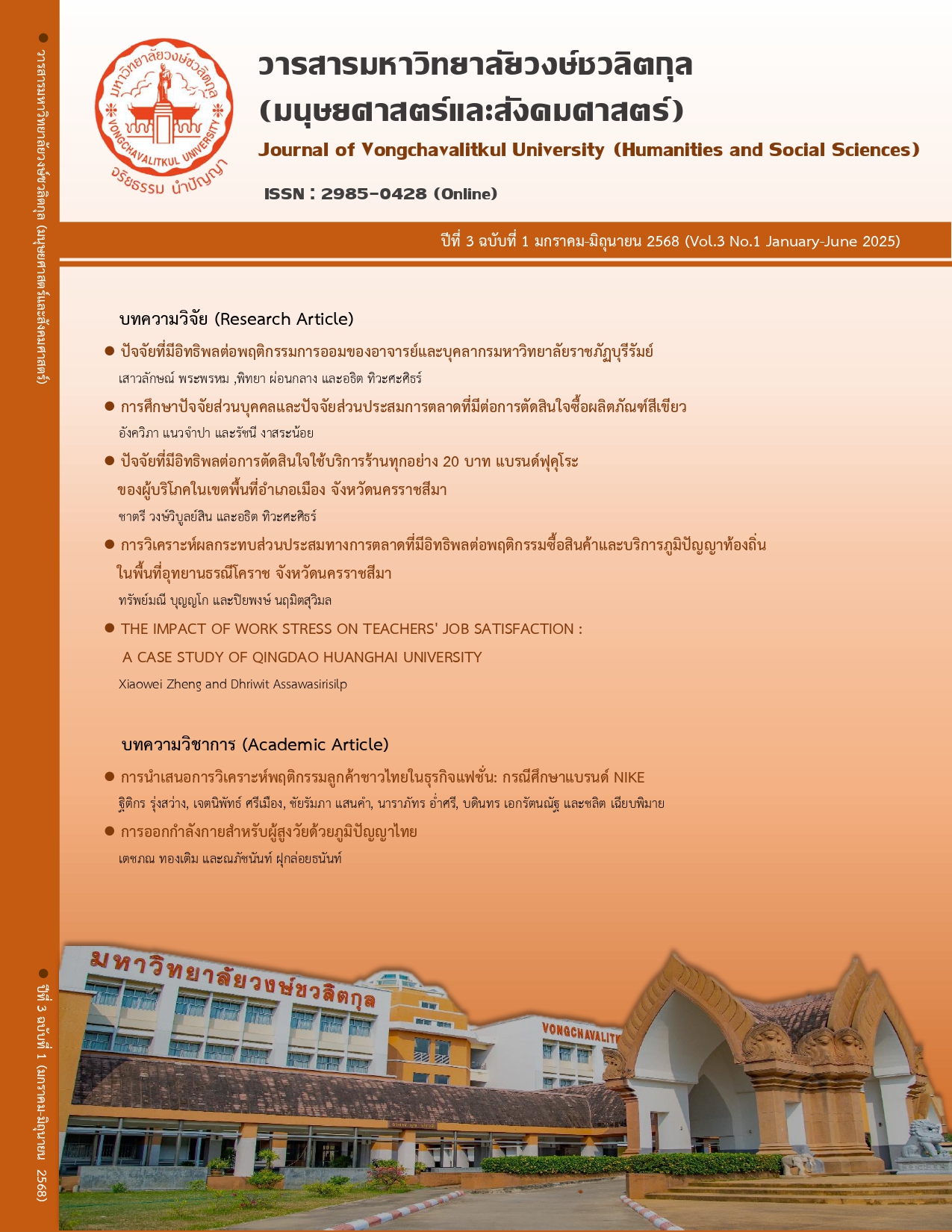
การนำเสนอการวิเคราะห์พฤติกรรมลูกค้าชาวไทยในธุรกิจแฟชั่น: กรณีศึกษาแบรนด์ NIKE
Article Sidebar
Main Article Content
บทคัดย่อ
บทคัดย่อ
บทความวิชาการนี้มีวัตถุประสงค์เพื่อนำเสนอการวิเคราะห์พฤติกรรมลูกค้าชาวไทยและการถอดแบบกลยุทธ์ทางการตลาดของธุรกิจซื้อมาขายไปที่ประสบความสำเร็จ โดยใช้แนวคิดพฤติกรรมลูกค้าและแนวคิดส่วนประสมทางการตลาดสำหรับธุรกิจบริการเป็นกรอบในการศึกษา รวบรวมข้อมูลโดยใช้วิธีการศึกษาจากข้อมูลทุติยภูมิจากการทบทวนวรรณกรรมจากเอกสาร งานวิจัย บทความวิชาการ และดำเนินการวิเคราะห์เชิงเนื้อหา
ผลการศึกษาพบว่า ธุรกิจแฟชั่นแบรนด์ NIKE ได้วางกลยุทธ์ทางการตลาดที่เน้นในด้านการส่งเสริมการตลาดโดยการออกแบบกิจกรรมทางการตลาดเชิงเนื้อหา การตลาดเชิงกิจกรรม การเสริมสร้างความร่วมมือระหว่างบุคคลและตราสินค้าที่มีชื่อเสียง และการใช้สื่อสมัยใหม่ในการส่งเสริมการตลาดเพื่อสร้างการรับรู้ในตราสินค้าให้กว้างขวางมากยิ่งขึ้น อีกทั้งการให้ความสำคัญด้านช่องทางการจำหน่ายโดยการสร้างช่องทางการจัดจำหน่ายที่หลากหลายรูปแบบทั้งรูปแบบออนไลน์และออฟไลน์เพื่อให้เข้าถึงลูกค้ากลุ่มเป้าหมายได้อย่างทั่วถึง นอกจากนั้นแล้วธุรกิจดังกล่าวยังให้ความสำคัญในการออกแบบผลิตภัณฑ์ที่มีคุณภาพและมีความหลากหลายเพื่อสร้างความดึงดูดใจแก่ลูกค้าอย่างเหมาะสมควบคู่กับกลยุทธ์ทางด้านการวางราคาที่เป็นธรรมสอดคล้องกับคุณภาพสินค้า และการให้ความสำคัญกับการให้ข้อมูลแก่ลูกค้าแบบการสื่อสารสองทางเพื่อประสิทธิภาพในการสื่อสาร โดยข้อค้นพบในประเด็นพฤติกรรมลูกค้านั้นทำให้ทราบถึงความต้องการของลูกค้า และกระแสนิยมที่มีการเปลี่ยนแปลงไปตามยุคสมัย นับว่าเป็นข้อมูลสำคัญในการใช้ในการวางกลยุทธ์ทางการตลาดบริการที่เหมาะสมกับพฤติกรรมของลูกค้ากลุ่มเป้าหมายในปัจจุบัน นอกจากนี้ข้อค้นพบในประเด็นส่วนประสมทางการตลาดยังทำให้ทราบถึงกลยุทธ์ที่สำคัญที่ส่งผลให้ธุรกิจดังกล่าวประสบความสำเร็จอีกด้วย ผลการศึกษานี้นำไปสู่แนวทางการพัฒนาสำหรับการประกอบธุรกิจที่มีบริบทใกล้เคียงกันให้ประสบความสำเร็จและตอบสนองต่อความต้องการของลูกค้า ทั้งนี้ผู้ประกอบการสามารถนำผลจากการศึกษานี้ไปประยุกต์ใช้ให้สอดคล้องตามบริบทธุรกิจของตน
Article Details

อนุญาตภายใต้เงื่อนไข Creative Commons Attribution-NonCommercial-NoDerivatives 4.0 International License.
เอกสารอ้างอิง
กมลวรรณ ศันสนะบวร. (2564). กลยุทธ์การสื่อสารการตลาดของ Sneaker แบรนด์ Nike ในสถานการณ์ COVID-19 ที่มีผลต่อการตัดสินใจซื้อของผู้บริโภคในช่วงอายุ 15-30 ปี ในเขตกรุงเทพมหานคร (รายงานผลการวิจัย). กรุงเทพฯ: มหาวิทยาลัยกรุงเทพ.
จิรันธนิน กมลเลิศ. (2565). หรือเวียดนามจะไม่ใช่สวรรค์ของผู้ผลิตรองเท้าแบรนด์ดังอีกต่อไป! เมื่อภาษีทรัมป์บีบต้นทุน Nike, adidas, PUMA พุ่งสูง. สืบค้น 22 เมษายน 2568. จาก https://thestandard.co/author/iranthanin-p/?page=9.
จอมพล ศรีสุข. (2563). ปัจจัยที่มีอิทธิพลต่อการตัดสินใจซื้อรองเท้ากีฬาไนกี้ (NIKE) ของผู้บริโภคที่เป็นนักกีฬาบาสเกตบอลในระดับมหาวิทยาลัย ในกรุงเทพมหานคร (รายงานผลการวิจัย). กรุงเทพฯ: มหาวิทยาลัยสยาม.
ฐิติมา ผการัตน์สกุล และวิโรจน์ เจษฎาลักษณ์. (2558). กลยุทธ์ในการดาเนินธุรกิจเสื้อผ้าแฟชั่นผ่านเครือข่ายสังคมออนไลน์. Veridian E-Journal, Slipakorn University, 8(3), 538-552.
ศราวุธ ลาภยืนยง และวัชระ ยี่สุ่นเทศ. (2563). การตลาดเนื้อหาบนสื่อสังคมที่มีผลต่อการตัดสินใจซื้อรองเท้าไนกี้ (NIKE) (รายงานผลการวิจัย). กรุงเทพฯ: มหาวิทยาลัยเกษมบัณฑิต.
ศิริวรรณ เสรีรัตน์ และคณะ. (2552). การบริหารการตลาด. กรุงเทพมหานครฯ: ธรรมสานต์.
ศุภณัฐ บูรณเรื่องศักดิ์ และอัศวิณ ปสุธรรม. (2563). ภาพลักษณ์ตราสินค้าและค่านิยมที่มีผลต่อการตัดสินใจซื้อรองเท้ากีฬาไนกี้ (NIKE) ของผู้บริโภคในจังหวัดสระบุรี (รายงานผลการวิจัย). กรุงเทพฯ: มหาวิทยาลัยหอการค้าไทย.
สุรศักดิ์ สวัสดิ์สลุง. (2566). ปัจจัยการรับรู้คุณค่าที่ส่งผลต่อทัศนคติต่อตราสนค้า และการรับรู้คุณภาพที่มีผลต่อความตั้งใจซื้อผลิตภัณฑ์ตราสินค้าไนกี้ (NIKE) (รายงานผลการวิจัย). กรุงเทพฯ: มหาวิทยาลัยมหิดล.
สุพัตรา คำแหง ศิวารัตน์ ณ ปทุม และปริญ ลักษิตามาศ. (2561). รูปแบบของปัจจัยความสำเร็จในการบริหารการตลาดสมัยใหม่ ของผู้ประกอบการใหม่สู่ประเทศไทย 4.0. วารสารธรรมศาสตร์, 37(1), 1–18.
อรชพร ศรีพรมใต้ และธงชัย ศรีวรรธนะ. (2567). อิทธิพลของภาพลักษณ์ตราสินค้าและการรับรู้คุณภาพสินค้าที่ส่งผลต่อความตั้งใจซื้อรองเท้ากีฬาไนกี้ (รายงานผลการวิจัย). กรุงเทพฯ: มหาวิทยาลัยเกษตรศาสตร์.
อโณทัย งามวิชัยกิจ. (2566). การตลาดธุรกิจบริการในยุคดิจิทัล. กรุงเทพ: โรงพิมพ์มาร์เกตติ้ง แอนีแว.
อนุศักดิ์ ฉิ่นไพศาล. (2566). พฤติกรรมผู้บริโภค. กรุงเทพ: ซีเอ็ดยูเคชั่น.
เอกพงษ์ โรจน์บุญมา และสุทธิภัทร อัศววิชัยโรจน์. (2566). อิทธิพลของภาพลักษณ์ตราสินค้า บุคลิกภาพผู้บริโภค ที่มีความภักดีต่อตราค้าของรองเท้ากีฬาผ้าใบ NIKE. วารสารวิทยาการจัดการ มหาวิทยาลัยราชภัฏอุดรธานี, 5(1), 87-99.
Blockdit.com. (2566). ประวัติของไนกี้. สืบค้น 22 เมษายน 2568. จาก https://www.blockdit.com/posts/643913a8d440e8c7ade4f616.
Kotler, P., & Keller, K. L. (2012). Marketing Management (14th ed.). Edinburgh Gate, England: Pearson Education Limited.
Mankeshva S. N., Mohamed K., & Raju A. (2022). Brand Influencing Customers Buying Behaviour: A Case Study on Nike. Retrieved from https://iopscience.iop.org.
Marketeeronline.com. (2566). แบรนด์แฟชั่นมูลค่าสูงสุดในโลก ปี 2023 Nike มาแรงแซงทุกแบรนด์. สืบค้น 22 เมษายน 2568. จาก https://marketeeronline.co/archives/296648.
Popticles.com. (2563). Nike แบรนด์รองเท้ากีฬาระดับโลก. สืบค้น 22 เมษายน 2568. จาก https://www.popticles.com/brand-history/brand-history-of-nike/.
Sukumar, Shankar. V. P. (2024). A Study on Consumer Satisfaction towards Nike with Reference to Coimbatore City. International Journal of Research Publication and Reviews, 5(5), 769-775.
Xcommerce.co.th. (2563). ถอดรหัสความสำเร็จระดับโลกของ NIKE. สืบค้น 22 เมษายน 2568. จาก https://www.xcommerce.co.th/ถอดรหัสความสำเร็จระดับ/.
