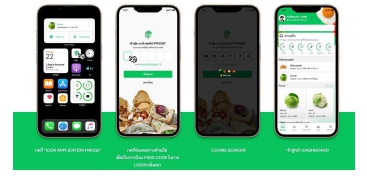
Application Design for Food Waste Management and Reduction
DOI:
https://doi.org/10.60101/jimc2022.34Keywords:
Prototype, Application Design, Food Waste Management and ReductionAbstract
The study objectives were as follows: 1. to study the problem conditions and the need for a food waste management and reduction application; 2. to study the sample group's opinion on the usability of the application design draft; and 3. to create an application prototype. 4. to assess the quality of the application prototype from experts, and 5. to assess the sample group's satisfaction with the application prototype. The sample in this study were 180 people aged 20 to 30 living in Khlong Hok Sub-district, Pathum Thani Province, who were selected through accidental sampling.
The research found that 1. the sample groups were female (60.00 percent), single (68.30 percent), primarily engaged in self-cooking habits (70.00 percent), knew less about how to check food expiration (40.00 percent), and had problems with spoiled food or raw materials in the refrigerator (20.00 percent). 2. It was discovered that the majority of the sample chose a design style that emphasized the functionality to be clearly displayed, minimized the user's workflow while still displaying accurate information, and chose interfaces that are basic, easy on the eyes, and simple to learn with a size that is large enough for the user's perception. 4. the overall expert assessment of the application prototype was found to be good ( = 4.26, S.D. = 0.80), and 5. the overall satisfaction assessment from the sample towards the prototype application was at a very satisfied rating scale (
= 4.31, S.D. = 0.70).
References
ภาษาไทย
กรมควบคุมมลพิษ กระทรวงทรัพยากรธรรมชาติและสิ่งแวดล้อม. (2564). รายงานประจำปี 2563 กองจัดการกากของเสียและสารอันตราย. https://bit.ly/3DftrpX
กุลธิดา บรรจงศิริ. (2561). แนวทางการจัดการอาหารที่ถูกทิ้ง. วารสาร SAU JOURNAL OF SCIENCE & TECHNOLOGY, 4(1), 43-53.
ขวัญคณิศร์ อินทรตระกูลและณัฐฐา เพ็ญสุภา. (2563). การสูญเสียอาหารและขยะอาหารในประเทศไทยและแนวทางการแก้ปัญหา. วารสารการเกษตรนเรศวร, 17(2), 1-15.
จอมจันทร์ นทีวัฒนาและวิชัย เทียนถาวร. (2560). ความรู้และทัศนคติที่ส่งผลต่อพฤติกรรมการลดขยะชุมชนแม่กา อำเภอเมือง จังหวัดพะเยา. วารสารวิทยาศาสตร์และเทคโนโลยี, 25(2), 316-330.
ชัยนันต์ ไชยเสน. (2563). การจัดการขยะอาหารในครัวของโรงแรมเพื่อเพิ่มประสิทธิภาพในการจัดการวัตถุดิบ และเป็นมิตรกับสิ่งแวดล้อม. วารสารหาดใหญ่วิชาการ, 19(2), 371-387.
ดิเรกฤทธิ์ ทวะกาญจน์. (2553). การพัฒนารูปแบบการจัดการขยะมูลฝอยที่เหมาะสมสำหรับเทศบาลหาดใหญ่ อำเภอหาดใหญ่ จังหวัดสงขลา. [สารนิพนธ์ปริญญามหาบัณฑิต, สถาบันบัณฑิตพัฒนบริหารศาสตร์]. http://kb.psu.ac.th/psukb/handle/2016/15171
ธเรศ ศรีสถิต. (2553). วิศวกรรมการจัดการมูลฝอยชุมชน. สำนักพิมพ์แห่งจุฬาลงกรณ์มหาวิทยาลัย.
นิลมณี อุทิศผลและดวงพร พุทธวงค์. (2564). อิทธิพลของทัศนคติและการรับรู้ข่าวสารที่มีผลต่อการมีส่วนร่วมในการพัฒนาชุมชนของประชาชนในพื้นที่ตำบลคลองหก อำเภอคลองหลวง จังหวัดปทุมธานี. วารสารวิชาการมหาวิทยาลัยการจัดการและเทคโนโลยีอีสเทิร์น, 18(1), 321-332.
ปิยรัตน์ วงศ์จุมมะลิและรัดเกล้า เปรมประสิทธิ์. (2560). ของเสียเหลือศูนย์ (Zero Waste) : แนวคิดและหลักการสู่สังคมปลอดขยะ. การสัมมนาเครือข่ายนักศึกษาระดับบัณฑิตศึกษา สาขาสังคมวิทยาและมานุษยวิทยา ครั้งที่ 16 ประจำ ปีการศึกษา 2559 (น. 915-929).
พีรพนธ์ ตัณฑ์จยะ. (2561). การออกแบบประสบการณ์ผู้ใช้ของเทคโนโลยีปัญญาประดิษฐ์ User Experience Design of Artificial Intelligent Technology. วารสารวิชาการมหาวิทยาลัยอีสเทิร์นเอเชียฉบับวิทยาศาสตร์และเทคโนโลยี, 12(1), 39-46.
ภัทรานิษฐ์ ศรีจันทราพันธุ์. (2559). การลดขยะอาหารในครัวเรือนแบบครบวงจร. วารสารมหาวิทยาลัยศิลปากร ฉบับภาษาไทย, 36(3), 19-36.
รัชนีพร แก้ววิชิต. (2561). การรับรู้และการเข้าถึงผู้ใช้งานแอปพลิเคชัน BTS SkyTrain [การค้นคว้าอิสระปริญญามหาบัณฑิต, มหาวิทยาลัยกรุงเทพ] http://dspace.bu.ac.th/bitstream/ 123456789/ 4073/1/ratchaneporn_kaew.pdf
วริศรา เอกลาภ ธนภรณ์ ศรฉิมพลี และดาราพร เถื่อนเหลือ. (2564). การออกแบบตัวต้นแบบแอปพลิเคชันกิจกรรมพัฒนานักศึกษามหาวิทยาลัยเทคโนโลยีราชมงคลธัญบุรี [วิทยานิพนธ์ปริญญาเทคโนโลยีบัณฑิต ไม่ได้ตีพิมพ์]. มหาวิทยาลัยเทคโนโลยีราชมงคลธัญบุรี.
สถาบันวิจัยเพื่อการพัฒนาประเทศไทย. (2562). การศึกษาแนวทางการบริหารจัดการอาหารส่วนเกินเพื่อลดปัญหาขยะอาหารที่เหมาะสมกับประเทศไทย. https://tdri.or.th/wp-content/uploads/2019/09/final_food_waste_management.pdf
อัจฉรา อัศวรุจิกุลชัย พิมลพรรณ หาญศึก และเพียงใจ พีระเกียรติขจร. (2554). แนวทางการจัดการขยะให้เหลือศูนย์ภายในมหาวิทยาลัยมหิดล ศาลายา, วารสารการจัดการสิ่งแวดล้อม, 7(1), 17-29
ภาษาอังกฤษ
Portmann, L. (2022). Crafting an audience: UX writing, user stylization, and the symbolic violence of little texts. Discourse Context & Media, 49(2022), 1-8. https://doi.org/10.1016/ j.dcm.2022.100622
The GrassRoots Recycling Network. (2004). What is Zero Waste. http://www.grrn.org
Yazid, A. M., & Jantan, H. A. (2017). User Experience Design (UXD) of mobile application: An implementation of a case study. Journal of Telecommunication, Electronic and Computer Engineering, 3(9), 197-200.