สินเชื่อ Reverse Mortgage เหมาะสำหรับผู้สูงอายุไทยหรือไม่
คำสำคัญ:
สินเชื่อ, ผู้สูงอายุไทยบทคัดย่อ
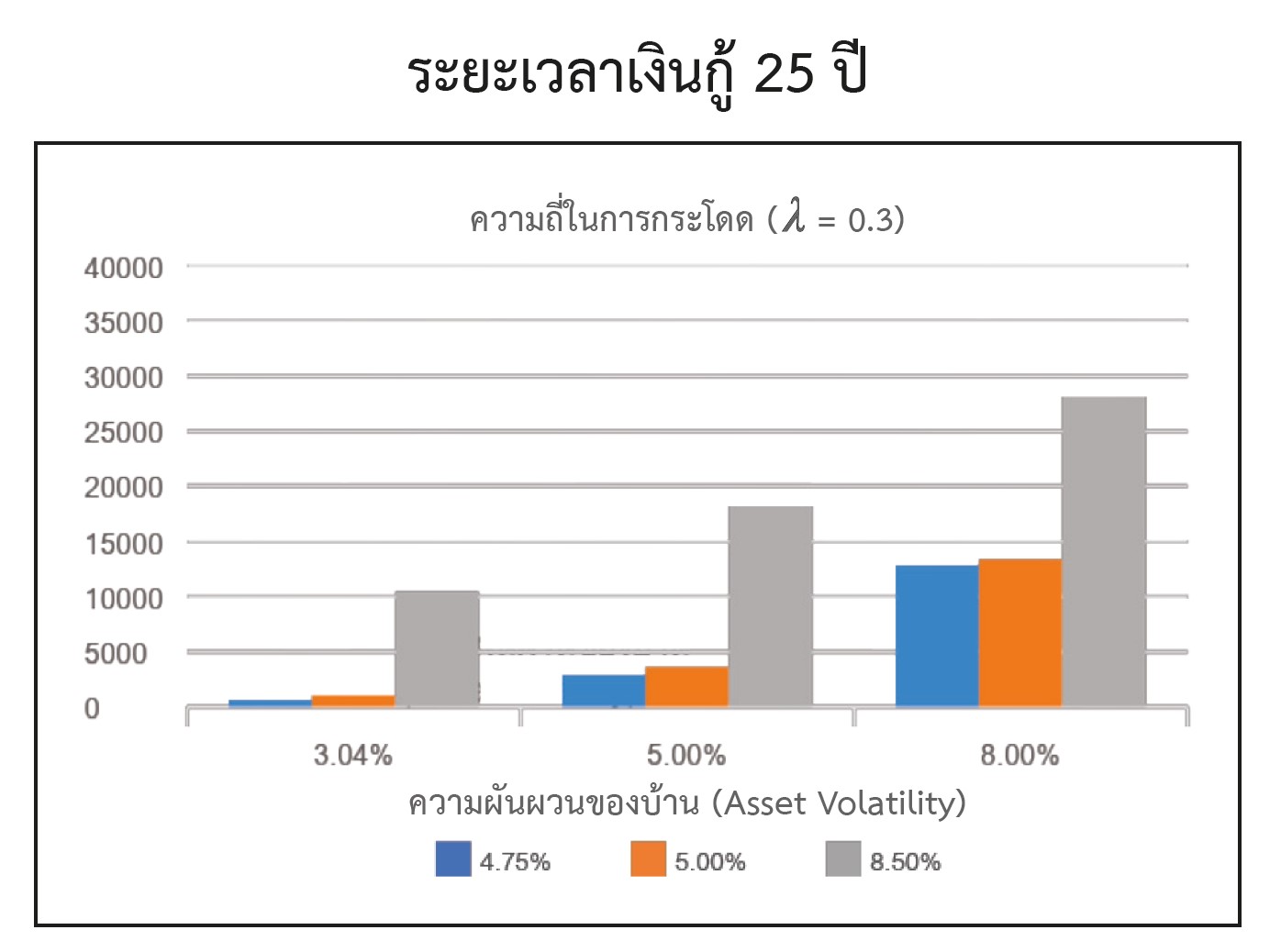
Reverse Mortgage เป็นสินเชื่อเพื่อช่วยเหลือผู้สูงอายุที่พัฒนาขึ้นในสหรัฐอเมริกา โดยให้ผู้สูงอายุที่มีบ้านสามารถใช้บ้านเป็นหลักประกันในการได้รับเงินรายงวดเพื่อการดำรงชีพจากสถาบันการเงิน เพื่อรองรับการเข้าสู่สังคมผู้สูงอายุของไทยธนาคารออมสินได้มีการนำร่องให้บริการสินเชื่อนี้ตามนโยบายรัฐบาล การศึกษานี้มีวัตถุประสงค์เพื่อประเมินว่าสินเชื่อนี้มีความเหมาะสมกับผู้สูงอายุไทยหรือไม่ โดยเริ่มจากการอธิบายสินเชื่อ้ograf understandingที่เรียกว่า Home Equity Conversion Mortgage (HECM) ของสหรัฐอเมริกาซึ่งเป็น Reverse Mortgage ที่มีการใช้กันมากที่สุด เพื่อช่วยให้เข้าใจสินเชื่อประเภทนี้ของธนาคารออมสิน อีกทั้งได้ทบทวนการศึกษาทางวิชาการที่เกี่ยวข้องในหลายประเด็น จากนั้นจึงได้วิเคราะห์สินเชื่อของธนาคารออมสินว่ามีความเพียงพอเหมาะสมกับผู้สูงอายุไทยหรือไม่ โดยการใช้ตัวอย่างในการเปรียบเทียบเงินงวดที่ผู้กู้ได้รับจากธนาคารออมสินกับโครงการ HECM ซึ่งพบว่าเงินงวดที่ผู้สูงอายุได้รับจากโครงการ HECM สูงกว่าเงินงวดที่ได้รับจากธนาคารออมสิน การศึกษายังได้ประมาณมูลค่าของพุทออปชั่น (Put Option) ซึ่งเป็นประโยชน์ที่ผู้กู้ได้รับจากการกู้สินเชื่อประเภทนี้โดยตัวแบบต่างๆ ผลการศึกษาพบว่าตัวแบบ Black–Scholes ที่สามารถคำนวณได้ง่ายโดยใช้สูตรสำเร็จ ให้ผลที่ต่ำกว่าวิธีการจำลองสุ่ม (Simulation) ค่อนข้างมาก เนื่องจากตัวแบบ Black–Scholes ไม่ได้คำนึงถึงลักษณะที่ราคาใช้สิทธิมีการเปลี่ยนแปลงได้ตามระยะเวลา (Time Varying Strike) และจากการที่สินเชื่ออาจครบกำหนดก่อนระยะเวลากู้เงินหากผู้กู้เสียชีวิต นอกจากนั้น การศึกษายังพบว่ามูลค่า Put Option ที่ผู้สูงอายุได้รับต่ำกว่าค่าใช้จ่ายคงที่ในการกู้เงิน แม้แต่ในกรณีที่การจำลองสุ่มใช้ตัวแบบการเปลี่ยนแปลงราคาบ้านที่มีองค์ประกอบของการกระโดด (Jump Process) เช่นช่วงวิกฤติเศรษฐกิจก็ตาม โดยรวมผลการศึกษาชี้ว่าสินเชื่อนี้แพงเกินไป ภาครัฐควรพิจารณาการประกันราคาบ้าน (Mortgage Insurance) ซึ่งจะช่วยให้ธนาคารสามารถให้วงเงินสินเชื่อที่สูงกว่าปัจจุบัน ส่งผลให้เงินงวดที่ผู้สูงอายุได้รับเพื่อการดำรงชีพเพิ่มขึ้น
เอกสารอ้างอิง
Campbell, John Y. 2006. “Household Finance.” Journal of Finance: 61, 1553 - 1604.
Case, Bradford, and Ann B. Schnare. 1994. “Preliminary evaluation of the HECM reverse mortgage program.” Journal of the American Real Estate and Urban Economics Association: 22(2), 301–346.
Choi, James J., David Laibson and Brigitte C. Madrian. 2011. “$100 Bills on the Sidewalk: Suboptimal Investment in 401(k) Plans.” Review of Economics and Statistics: 93, 748 - 763.
Consumer Financial Protection Bureau. 2015. “A closer look at reverse mortgage advertisements and consumer risks.” Office for Older Americans
Davidoff, Thomas. 2015. “Can 'High Costs' Justify Weak Demand for the Home Equity Conversion Mortgage?” Review of Financial Studies: 28, 2364-2398.
Davidoff, Thomas, Patrick Gerhard and Thomas Post. 2017. “Reverse mortgages: What homeowners (don’t) know and how it matters.” Journal of Economic Behavior & Organization: 133, 151-171.
DeNavas-Walt, C., Proctor, B. and Lee, C. 2006. Income, Poverty, and Health Insurance Coverage in the United States: 2005, Current Population Reports, P60-231, U.S. Census Bureau.
Haurin, Donald, Chao Ma, Stephanie Moulton, Maximilian Schmeiser, Jason Seligman and Wei Shi. 2016. “Spatial Variation in Reverse Mortgages Usage: House Price Dynamics and Consumer Selection,” Journal of Real Estate Financial Economics: 53, 392 - 417.
Johnson, Eric, Stephan Meier, and Olivier Toubia (2016) ,"Leaving Money on the Kitchen Table: Exploring Sluggish Mortgage Refinancing Using Administrative Data, Surveys, and Field Experiments", in NA - Advances in Consumer Research Volume 44, eds. Page Moreau and Stefano Puntoni, Duluth, MN : Association for Consumer Research, Pages: 179-184.
Keys, Benjamin C., Devin G. Pope, and Jared C. Pope. 2016. “Failure to Refinance.” Journal of Financial Economics 122 (2016), 482–499.
Laibson, David. 1997. “Golden Eggs and Hyperbolic Discounting.” Quarterly Journal of Economics: 112(2), 443-77.
Lucas, Deborah. 2016. “Hacking Reverse Mortgages.” Working paper. MIT Golub Center for Finance and Policy.
Michelangeli, Valentina. 2008. “Does It Pay to Get a Reverse Mortgage?” Unpublished manuscript, Boston University.
Nakajima, Makoto and Irina Telyukova. 2017. “Reverse Mortgage Loans: A Quantitative Analysis.” Journal of Finance: 72 (2), 911-950.
Redfoot, Donald L., Ken Scholen, and S. Kathi Brown. 2007. “Reverse mortgages: Niche product or mainstream solution?” Report on the 2006 AARP National Survey of Reverse Mortgage Shoppers, AARP Public Policy Institute.
Shan, Hui. 2011. “Reversing the trend: The recent expansion of the reverse mortgage market.” Real Estate Economics: 39, 743–768.
Tirapat, Sunti and Suparattana Tanthanongsakkul. 2017. Reverse Mortgage for Thai Elderly. Foundation of Thai Gerontology Research and Development Institute (in Thai).
Warshawsky, Mark J. 2017. “Retire on the House: The Possible Use of Reverse Mortgages to Enhance Retirement Security.” Working Paper, Mercatus Center at George Mason University, Arlington, VA.
ดาวน์โหลด
เผยแพร่แล้ว
รูปแบบการอ้างอิง
ฉบับ
ประเภทบทความ
สัญญาอนุญาต
ลิขสิทธิ์ (c) 2020 https://creativecommons.org/licenses/by-nc-nd/4.0/

อนุญาตภายใต้เงื่อนไข Creative Commons Attribution-NonCommercial-NoDerivatives 4.0 International License.